
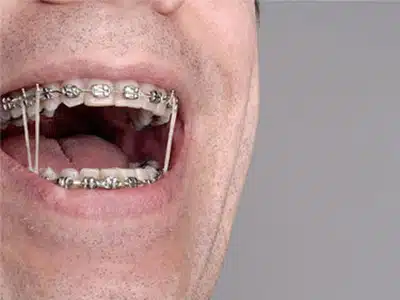
Rubber bands, also called elastics, are small elastic bands that hook between brackets on your upper and lower teeth to create force between the two arches. They are one of the most important tools an orthodontist has for correcting a bite. Straightening teeth is only part of orthodontic treatment — getting the upper and lower arches to fit together correctly requires a different type of force than brackets and wires alone can generate, and that is what rubber bands do.
What are Rubber Bands?
In short, rubber bands are used to help move your teeth along the archwire to aid in tooth movement for your particular treatment plan. There are many different ways to wear rubber bands and how long you wear them is determined by your orthodontist. Dr. Graham Gardner, Dr. Natalie La Rochelle, and Dr. Dana Tang at Gardner and La Rochelle Orthodontics will instruct you on exactly how to wear your rubber bands and when and how often to change them based on your personalized treatment plan. Since your rubber bands lose their elasticity with use, patients are normally instructed to replace them at least once a day, especially after eating and brushing.
Who Needs Rubber Bands?
Not everyone with braces needs to wear rubber bands. It all depends upon your particular problem and treatment plan. Rubber bands come in different sizes and strengths and are typically used to help correct poor bites such as underbites, overbites, and crossbites. Even though your teeth may look straight, if the upper and lower teeth and/or jaws do not line up correctly, it can result in a malocclusion (poor bite). Rubber bands are used together with brackets and archwires to correct these types of issues.
Taking Care of Rubber Bands
If you are instructed to wear rubber bands, they are a very important part of your treatment to achieve a better smile and finished result. You can remove your rubber bands while eating, brushing, and flossing. And don’t forget to put them back on after you are done!
Forgetting to replace them or failing to wear them as directed could delay your progress and extend your treatment time. So, make sure you always have plenty of rubber bands on hand in your pocket or backpack should you need to change them. Packets of replacement rubber bands are given in-office at your appointments, once prescribed. Feel free to contact our office if you notice you are running low in between appointments or lose them.
How to Put Rubber Bands on Braces
Your orthodontist will show you exactly how to hook your rubber bands at your appointment, and the configuration varies depending on your treatment plan. Most patients hook elastics from a hook on an upper bracket or molar band to a hook on a lower bracket, creating a diagonal pull between the arches.
- Use a mirror when you are first learning. It becomes second nature quickly but the first few times are easier with a visual.
- Keep extras with you. Rubber bands break occasionally and need to be changed at least once a day regardless. Carrying a small bag of replacements means you are never caught without them.
- Put them back in after every meal. Eating with rubber bands in is not recommended, but leaving them out for extended periods slows your progress. The habit of removing them to eat and replacing them immediately after is worth building early.
- If your rubber bands are causing unusual soreness beyond the normal adjustment period, or if a hook feels sharp or is irritating your cheek, contact our office rather than stopping wear on your own.
If you have questions about how to wear your elastics, contact our office today. Your new smile will thank you later!


